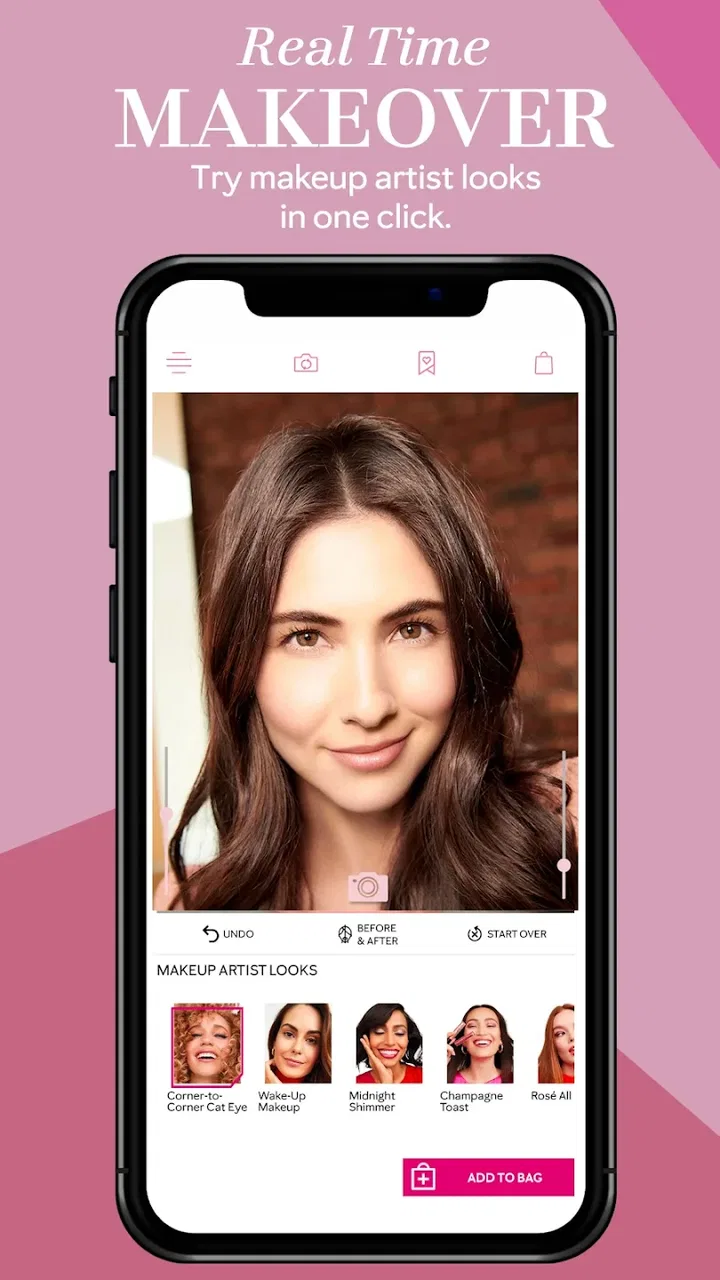
Mary Kay® MirrorMe™
- 3.6
- Rating
- 100.00K
- Installs
- Free
- Price

 Analysis by App-foxy
Choosing makeup from a screen is usually harder than it sounds. A shade can look right in a product photo and still feel completely different once it is on your face. I tried Mary Kay® MirrorMe™ as a way to make that first decision less abstract, and I found that its real value is not replacing a mirror. It is helping you narrow down a look before you commit to applying anything.
This is a free beauty app from Mary Kay, Inc., designed around creating makeup looks. It is rated for Everyone, which makes it approachable for teenagers, beginners, and anyone who simply wants a low-pressure way to explore cosmetics. The app has an average rating of 3.5 from around a thousand ratings, and its install count has passed one hundred thousand. Those figures suggest a useful but not universally loved experience, which matches my own impression: the concept is convenient, while the quality of the experience depends heavily on how carefully you use it.
From a makeup question to a complete look
I find the most useful starting point is a small, specific makeup question rather than an open-ended search for inspiration. That gives each comparison a purpose and helps me spend less time changing options without learning much from them. From there, I can judge whether a promising idea holds together as a complete look.
You May Also Like

 Google Keep - Notes and lists
Google Keep’s Quiet Growth Shows the Appeal of Simpler Notes
As mobile work gets busier, Google Keep keeps winning a simple contest: capture a thought quickly, find it later, and get on with the day.

 Blood Strike: 2.5 Anniversary
Blood Strike’s Loadouts Turn Every Drop Into a Tactical Gamble
A close look at Blood Strike’s custom loadouts: how fast access to signature weapons reshapes its battle royale rhythm, rewards preparation, and narrows the gap between fights.

 Pandora - Music & Podcasts
Pandora’s Music Is Easy to Start, but Harder to Recover
Pandora’s strength is its low-effort path from a seed to a station. Its weak spot is how much confidence it asks you to place in connection, setup, and quiet recovery.

 8 Ball Pool
 Is Built on Rivalries, Rematches, and Routine
A close look at the rivalries, rematches, shared routines, and unanswered safety questions that turn a quick pool match into a persistent mobile community.

 Samsung Music
’s Quiet Strength Is Playing What You Already Own
Its reach comes less from spectacle than from dependable access to a personal library. That simplicity is both the app’s strongest retention engine and its ceiling.

 AccuWeather: Weather Radar
AccuWeather Review: A Quick, Clear Forecast for Everyday Decisions
For everyday plans, the best forecast is the one you can understand quickly. AccuWeather makes rain timing, radar, and local conditions easy to act on, with a few trade-offs.
More From Our News Desk



Starting with the problem you actually have
The most useful way to approach MirrorMe is not to open it with a completely blank mind and expect it to choose your style for you. I got better results when I started with a specific question: do I want a softer everyday face, a more defined eye, or a stronger lip? That small decision gives the app a purpose and makes the visual experimentation feel less random.
For example, imagine getting ready for work and having ten minutes before leaving. You may already know that you want something polished but not dramatic. Instead of applying several products and removing them when the balance feels wrong, you can use the app to preview combinations first. The benefit is not that the screen makes the final decision; it lets you reject unsuitable ideas before spending time on your actual face.
I also found it useful when preparing for an event. A wedding, dinner, or evening gathering often creates the temptation to try a look that is much stronger than your normal routine. MirrorMe gives you a place to test that direction visually before deciding whether it suits your comfort level. That makes it particularly friendly to people who enjoy makeup but dislike trial and error on their skin.
Building the look step by step
The core experience is visual experimentation. You work toward a makeup look by trying different cosmetic choices and observing how they change the overall impression. I recommend changing one element at a time rather than switching everything together. If you alter the eyes, lips, and complexion in one move, it becomes difficult to understand which part improved the look and which part made it feel unbalanced.
That one-change-at-a-time method is a small but important workflow improvement. Start with the feature that matters most for the occasion, then use the other choices to support it. If the eyes are meant to be the focus, keep the lip more restrained while comparing eye options. If the lip color is the main idea, avoid judging it alongside an equally intense eye treatment. This turns the app from a novelty into a simple planning tool.
Another practical tip is to compare a safe option with a bolder option. I like beginning with something close to my usual taste, then moving only one step away from it. The comparison is more useful than browsing endlessly because it shows whether the stronger choice adds something or merely feels unfamiliar. You can then return to the first look without having to recreate it on your face.
The app is best understood as a preview rather than a precise promise. A digital representation can help with color relationships and general balance, but it cannot reproduce every detail of real makeup. Skin texture, indoor lighting, application technique, and the condition of the products all affect the final result. I would use the screen to answer “which direction should I try?” rather than “exactly how will this look in person?”
The handoff from screen to real makeup
The most important handoff happens when you leave the app and reach for physical products. This is where a little organization pays off. Before closing the preview, note the main idea of the look in plain language: soft eyes with a brighter lip, neutral tones with extra definition, or a more noticeable evening finish. That description is often more useful than trying to remember every on-screen detail.
If you are working with products already in your makeup bag, treat the app as a guide to proportions rather than a shopping list. You may not own an identical shade, but you can usually ask whether your closest alternative should be lighter, warmer, cooler, softer, or more intense. This is one of the app’s better everyday uses because it encourages creative substitution instead of making the process depend on owning an exact collection.
There is also a handoff between the person experimenting and the person giving advice. If you use a Mary Kay consultant or ask a friend for an opinion, a chosen look can make that conversation more concrete. You are no longer describing a vague idea such as “something natural but different.” You can show the direction you are considering and ask what could be adjusted. The app does not replace personal advice, but it can make the discussion easier to start.
I would still verify any important choice under the lighting where you expect to wear it. A look that feels balanced on a bright phone screen may appear stronger in a dim room or flatter under office lighting. For an event, I would preview the idea, recreate a simplified version with real products, and then inspect it in more than one light source. That extra step prevents the common mistake of treating a digital preview as the final fitting.
What the finished result is good at
When it works well, MirrorMe reduces hesitation. I found it most helpful for deciding whether several colors belong together and for seeing the difference between a conservative look and a more expressive one. It can also help beginners understand that makeup is not only about individual products; the effect comes from how the choices share attention across the face.
That makes it a strong companion for someone who is still learning their preferences. Instead of buying or applying a product simply because the shade looks attractive on its own, you can consider how it affects the whole look. A vivid lip may need quieter eyes. A stronger eye may benefit from a less competing lip. These are basic makeup principles, but seeing them in context makes them easier to understand.
The app can also support a repeatable routine. Once you have found a combination that suits your normal schedule, you can use that idea as a starting point on busy mornings. I would not expect it to automate the routine, but it can reduce the mental work of deciding what belongs together. For someone who tends to stand in front of a makeup bag without a plan, that small reduction in decision fatigue is meaningful.
There is a confidence benefit too. Trying a new look digitally is less intimidating than applying it immediately, especially for someone who rarely experiments with color. You can explore a stronger direction privately, decide what feels comfortable, and then translate only the parts you like into a real routine. That makes the app more approachable than jumping directly into a full makeover.
Where the workflow becomes less reliable
The first limitation is the gap between a simulated image and real application. A preview may communicate the broad effect, but it cannot account for how evenly you apply a product, how your skin reflects light, or how a shade changes after several hours. If you need highly accurate color matching, I would trust a physical sample, a well-lit mirror, or advice from someone who can see your complexion in person more than the app alone.
The second limitation is that experimentation can become less useful when it turns into endless browsing. The app encourages trying possibilities, but not every possibility deserves equal attention. Without a clear goal, you may spend more time comparing looks than learning what you actually prefer. My solution is to set a small limit: choose a starting style, compare a few meaningful variations, and stop when one option clearly fits the occasion.
There can also be friction when the handoff to real products is not direct. A digital look may inspire you, but you still need to identify the closest items you own and decide how to apply them. That is fine for a user who enjoys the creative process. It is less appealing if you want an instant recommendation, a complete shopping plan, or a tutorial that guides every brush movement.
This is why I would not choose MirrorMe as my only tool for learning technique. A video tutorial or an experienced makeup professional is better when the problem is blending, placement, coverage, or correcting mistakes. The app is stronger at visual planning than at teaching the physical mechanics of application.
Who should use it and who should skip it
I would recommend it to makeup beginners, cautious experimenters, and existing Mary Kay customers who want to think through a look before applying products. It is also useful for anyone who enjoys comparing styles but does not want to remove and redo makeup repeatedly. Because it is free and rated for Everyone, trying it carries little commitment, particularly if you are simply curious about the format.
It is a better fit for planning than for precision. If your main goal is to coordinate colors, explore a different mood, or prepare for a specific occasion, it earns a place in your routine. If your priority is exact shade matching, detailed education, or professional-level realism, a different option will probably serve you better. A physical consultation can judge texture and finish more reliably, while a tutorial platform can offer deeper instruction.
I would also skip it if you dislike visual try-on tools in general. The app depends on your willingness to look at a simulated result and interpret it thoughtfully. Someone who wants a simple list of recommended products may find the creative process more work than expected. Likewise, users who already have a highly consistent makeup routine may not gain much unless they are preparing for a change.
Practical details before you decide
Mary Kay® MirrorMe™ is free, so the main investment is your time and attention rather than an upfront purchase. It was released on January 13, 2019, and the current version is 3.1.7. It requires operating system version 12 or later, so checking device compatibility before planning to use it is sensible. The app is available as a beauty-focused mobile experience rather than a replacement for a physical mirror or a personal consultation.
Those details matter because the app’s usefulness depends on context. On a compatible phone, it can be a quick companion while preparing for work or an occasion. On an older device that cannot meet the operating-system requirement, the workflow ends before the experimenting begins. I would also avoid judging a look only from a tiny preview; a larger, brighter screen makes comparisons easier when the phone allows it.
The developer is Mary Kay, Inc., which gives the experience a clear connection to the brand’s cosmetics world. That can be helpful if you are already familiar with its products and want to explore looks within that context. If you prefer a completely brand-neutral beauty planner, you may find the usual alternatives more flexible. The right choice depends on whether you want a focused brand experience or a broader cosmetics workspace.
My final take after following the whole process
I see MirrorMe as a decision-making aid, not a magic mirror. Its strongest moment comes between inspiration and application: you have an idea, but you are not yet sure whether the colors and intensity belong together. The app gives that uncertainty a visual form, lets you compare directions, and helps you arrive at the real mirror with a clearer plan.
My preferred workflow is simple. I begin with the occasion, choose one feature to emphasize, compare a familiar look with a slightly bolder variation, and then recreate the winner using the closest products I own. After that, I check the result in the lighting where I will actually wear it. This approach keeps the app useful without asking it to do something it cannot do, such as guarantee exact real-world color or teach every application technique.
The 3.5 average rating reflects a mixed reception, and I understand why. The idea is approachable and genuinely useful for visual planning, but the experience is not a substitute for hands-on testing. Still, because it is free, I think it is worth trying if you want a low-pressure way to explore makeup looks. Use it to make a better first choice, then let the real mirror make the final call.
FAQs for Mary Kay® MirrorMe™
01What is Mary Kay® MirrorMe™ and what does it do?
Mary Kay® MirrorMe™ is a virtual makeover app that allows users to try on various makeup products in real-time using augmented reality technology. The app provides an interactive experience where you can experiment with different looks and shades before making a purchase, making it easy to find the perfect products for your style.
02Is Mary Kay® MirrorMe™ free to use?
Yes, the Mary Kay® MirrorMe™ app is free to download and use. However, while the app itself does not charge for its features, you may need to purchase the actual makeup products separately if you decide to buy them after trying them virtually.
03How accurate are the virtual makeovers in the Mary Kay® MirrorMe™ app?
The Mary Kay® MirrorMe™ app uses advanced augmented reality technology to provide highly accurate virtual makeovers. While it offers a realistic preview of how different products may look, variations can occur due to lighting conditions and individual device camera quality. It's a helpful tool for visualizing potential looks.
04Can I save my looks or share them with others using the app?
Yes, the Mary Kay® MirrorMe™ app allows you to save your favorite looks to revisit later. Additionally, you can share these looks with friends or on social media directly from the app, making it easy to get opinions or showcase your style transformations to others.
05What devices are compatible with Mary Kay® MirrorMe™?
Mary Kay® MirrorMe™ is available for both Android and iOS devices. To ensure the best user experience, it is recommended to use it on devices running the latest operating systems with a good quality front-facing camera. Check the app store for specific device compatibility before downloading.
Pros
- Accurate virtual makeup try-ons.
- User-friendly interface design.
- Wide range of products available.
- Realistic color representation.
- Easy sharing with friends.
Cons
- Limited customization options.
- Requires stable internet connection.
- Occasional app crashes.
- In-app purchases might be costly.
- Limited to Mary Kay products.

Mary Kay® MirrorMe™
Gallery